INGLES 4TO E
4TO E 34 EL SEÑOR DE MURUHUAY

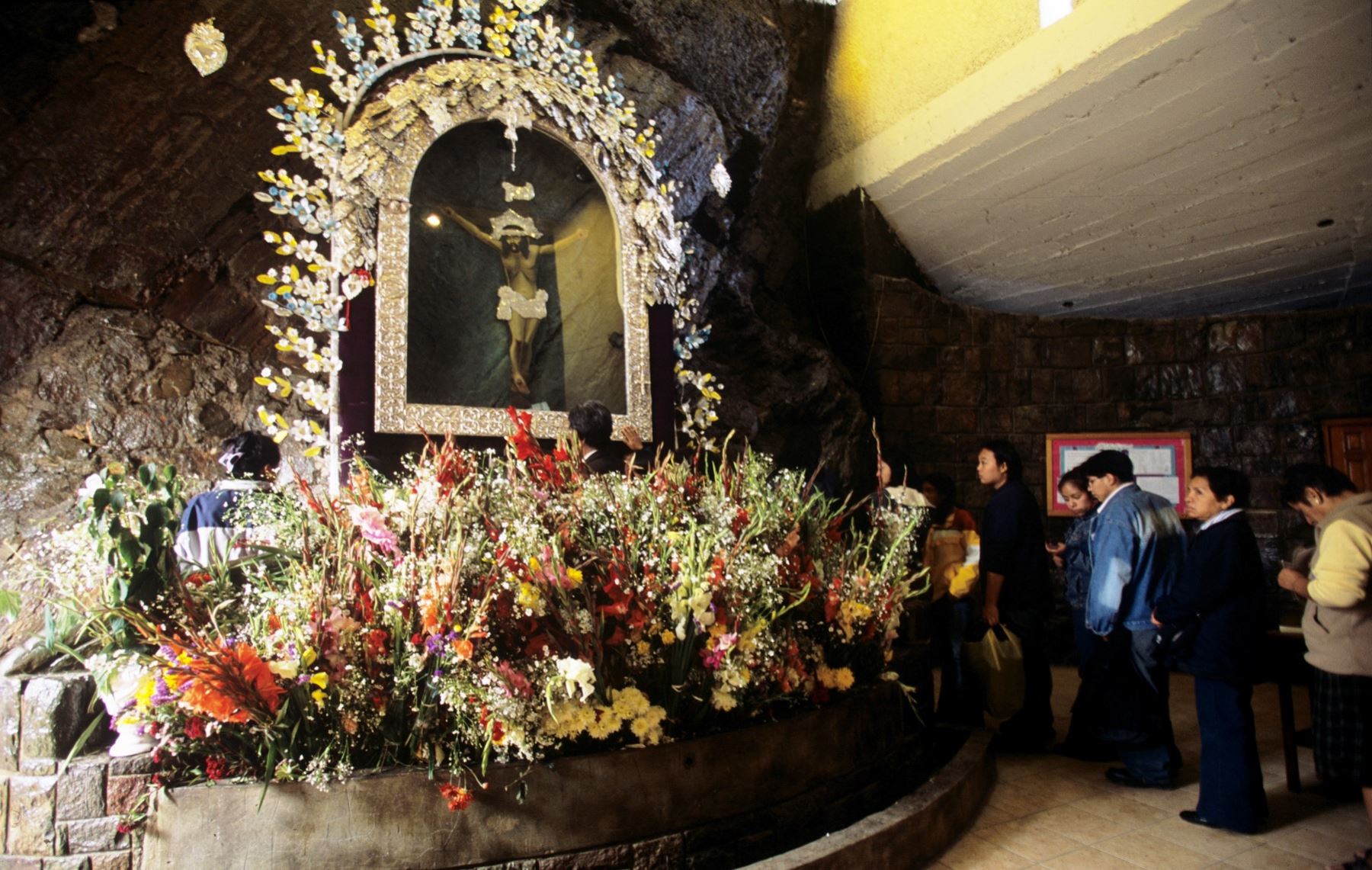


WHEN WE CELEBRATE THIS FESTIVITY
The festivity of the Lord of Muruhuay is celebrated every 3rd of May
Is done in the district of Acobamba, province of Tarma, Junín region. Congrega a crowd of faithful and tourists attracted by one of the most emblematic religious celebrations of Peru, reason why it was declared Cultural Heritage

History
The word Muruhuay means house of two  or several colors. It comes from two Quechua words "muru means" various colors "and" huay or huasi means house. In this place a pre-Inca population of Chavin influence flourished.
In Quechua Azucenas (Tarma, 1905), Adolfo Vienrich describes the appearance of the cross and the image of the Christ: "It is a reddish stone stained with a cross, it seems oil, but natural, on the cross the image has been painted". This image appears from the flank of the pass of the Quebrada Tranca, on the outskirts of the town of Acobamba.There are remains in the entire area where the "San Miguel" hill is. The smallpox epidemic could have occurred but in a rather early period when Acobamba already existed as a town.There are remains in the entire area where the"San Miguel" hill is. The smallpo epidemiccould have occurred but in a rather early period when Acobamba already existed as a town. Muruhuay is a very remote nameIn Quechua Azucenas (Tarma, 1905), Adolfo Vienrich describes the appearance of the cross and the image of the Christ: "It is a reddish stone stained with a cross, it seems oil, but natural, on the crosvarious colors "and" huay ohuasi means house. In this place a pre-Inca population of Chavin influence flourished. There are remains in the entire area where the "San Miguel" hill is. The smallpox epidemic could have occurred but in a rather early period when Acobamba already existed as a town. Muruhuay is a very remote name.reddish stone stained with a cross, it seems oil, but natural, on the cross the image has been painted". This image appears from the flank of the pass of the Quebrada Tranca, on the outskirts of the town of Acobamba.Muruhuay is a very remote name.
Quechua words "muru means" various colors "and" huay or huasi means house. In this place a pre-Inca population of Chavin influence flourished. There are remains in the entire area where the "San Miguel" hill is. The smallpox epidemic could have occurred but in a rather early period when Acobamba already existed as a town. Muruhuay is a very remote name.
The word Muruhuay means house of two or several colors. It comes from two
Comentarios
Publicar un comentario